
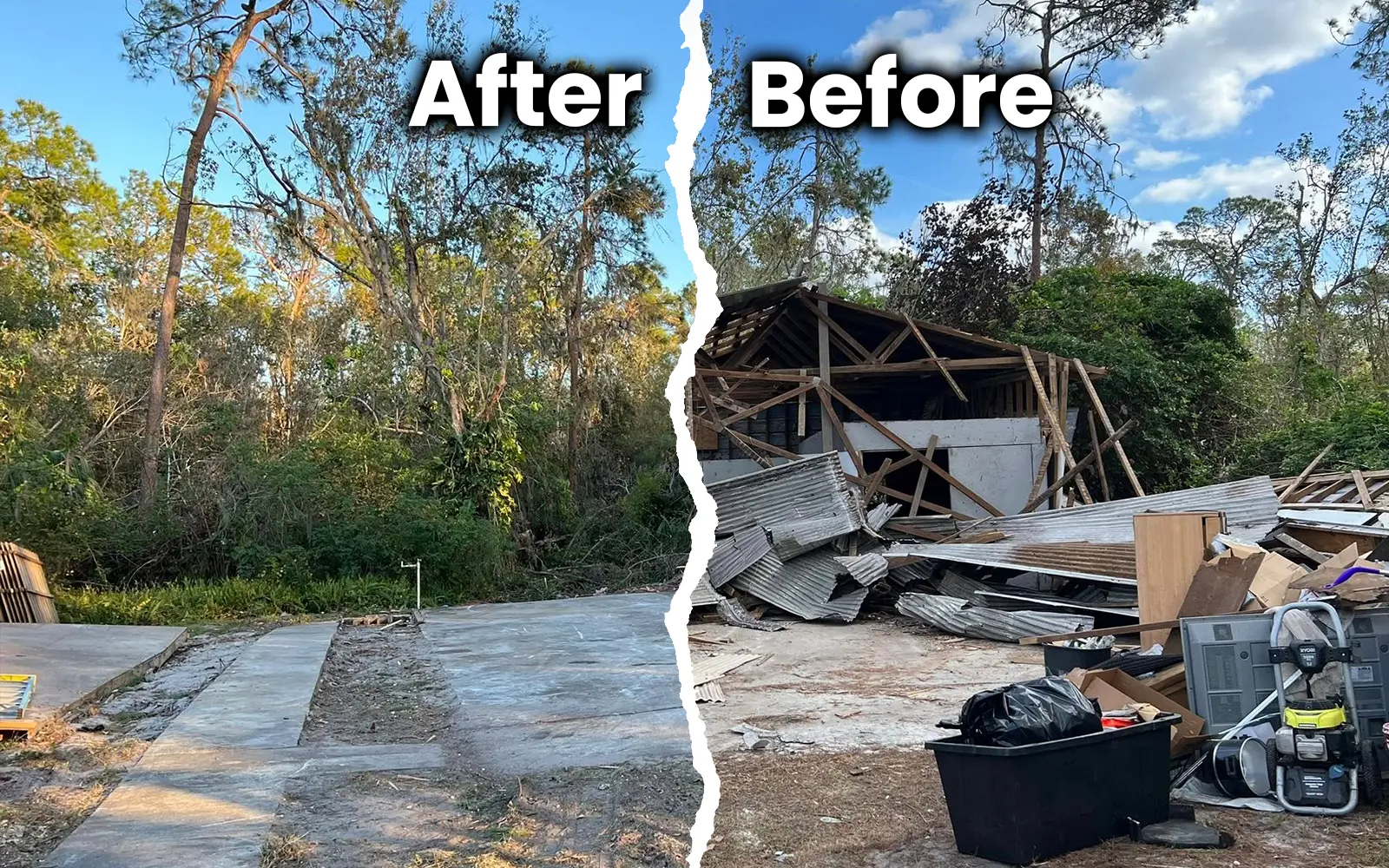
Do you need brush removal or a more complete lot-clearing scope?
Patriot Outdoor Services clears brush, overgrowth, small trees, downed vegetation, and agreed debris from Tampa Bay properties. A focused brush-removal job may leave selected trees and existing ground levels in place. A broader lot-clearing project may also need tree work, stump treatment, hauling, or rough grading, each confirmed in the estimate. We start with the area to be opened and its next use, then review equipment access, vegetation density, utilities, drainage, and features to protect. Clearing a footprint does not certify it as a construction pad or resolve wetland, setback, or permit requirements. Request a free estimate with the address, approximate area, access notes, and the finish you need.
What the service can include
Choose the clearing boundary and the finish first
A usable side yard, a visible fence line, and ground prepared for another contractor do not need the same finish. Walk the intended area with us and identify trees, planting, drainage features, and natural sections that should remain. The owner should establish the property boundary and any needed permission to access neighboring land. Clearing a corridor does not establish a surveyed boundary.
Ask the estimate to distinguish vegetation cut back, trees removed, stumps addressed, material hauled, and rough grading. Roots, grindings, and retained mulch affect what can happen next. A cleared area can still need additional preparation before planting, fencing, or construction. Naming that next use makes the handoff more useful than simply asking for bare ground.
Why acreage alone does not set the price
The measured area matters, but so do brush density, tree and stump work, hidden dumped material, and the route for moving equipment and debris. A smaller fenced yard can involve more handling than a larger open area. Hauling everything away also creates a different scope from retaining suitable processed vegetation on site. We confirm the method rather than applying a blanket per-acre price.
When requesting an estimate, describe the approximate area, what is growing there, any existing piles, and how the crew can reach it. Mention gates, soft ground, septic systems, irrigation, overhead lines, and known underground services. Photos and a sketch of the intended boundary are useful, but do not enter dense growth or unstable areas just to document them.
Resolve drainage and environmental questions before clearing
Do not assume that a dry-looking patch is free of environmental restrictions or that removing vegetation will solve standing water. Tell us about easements, conservation areas, wetlands, drainage routes, and previous approvals before the scope is set. Significant grade changes, engineered drainage, surveying, and construction-pad certification are not supplied by an ordinary clearing estimate.
Check the parcel and intended work with the responsible city or county. Hillsborough County's tree and land-alteration resources distinguish standalone tree work from clearing for residential construction. For wetland or surface-water questions, consult the relevant regulator using Florida DEP's environmental permitting information as a starting point. An estimate is not a permit determination.
Coordinate clearing with what comes next
If the main obstacle is a mature tree, discuss the tree-removal and stump scope before treating the job as brush clearing. If the growth is already cut and only a pile remains, yard-debris hauling may be the more direct starting point. Those distinctions help avoid pricing work you do not need.
For a built-on-site shed, plan the footprint, builder access, staging, and required site preparation together. Install final mulch, rock, or planting after heavier access and removal work. The estimate can identify a practical sequence without promising that clearing alone completes every stage.