How we plan outdoor work in Clearwater
Clearwater includes compact coastal properties, established inland neighborhoods, and addresses that may look local but fall under a different Pinellas County building authority. Patriot Outdoor Services verifies the field conditions the crew can see—access, trees, surfaces, debris, and the proposed footprint—while encouraging owners to confirm the jurisdiction and regulatory conditions that control permanent work.
A full-yard improvement often benefits from a deliberate sequence. Problem limbs and overgrowth are addressed before a shed is framed. Old items are hauled before material staging. Landscaping follows construction. This order keeps the new work from being damaged and lets the owner decide whether to complete every phase or stop once the highest-priority problem is solved.
Services customized for Clearwater properties
Tree services
We plan trimming, removal, grinding, and cleanup around homes, pools, fences, driveways, and neighboring property. Coastal storm debris is addressed only after electrical and structural hazards are cleared.
Full tree services guideLand and lot clearing
Selective brush and overgrowth removal can reclaim compact yards and project footprints. Drainage and flood conditions are considered before assuming rough clearing should include grading.
Full land and lot clearing guidePractical landscaping
Rock, mulch, bed cleanup, and simple borders can create lower-maintenance finishes around entries, pool equipment, utility paths, and new outdoor structures.
Full practical landscaping guideJunk and debris removal
We remove accepted non-hazardous items and yard debris from accessible spaces. Weight, carrying distance, parking, and disposal restrictions are included in the scope.
Full junk and debris removal guideCustom sheds
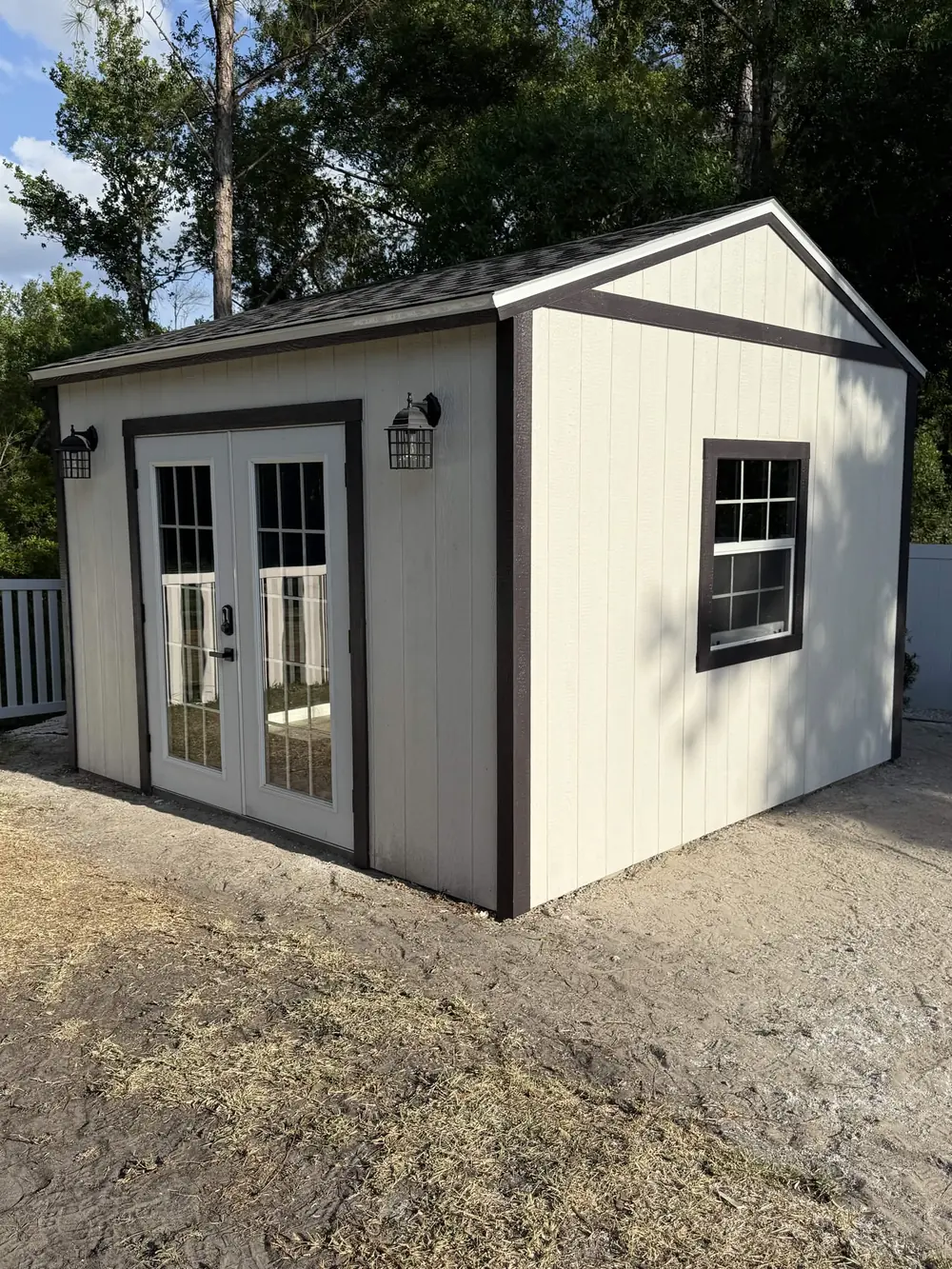
On-site building can solve narrow access while allowing doors, windows, colors, and roof details to be selected for the property. Flood-zone and city review may affect the final design.
Full custom sheds guideProperty planning and local approvals
Clearwater's official shed checklist states that small sheds may be permit-exempt under defined conditions, while all sheds still must meet setback and height rules. Larger structures, permanent foundations, utilities, tree removal, and flood-zone properties can require additional documentation. First confirm that the parcel is actually inside the City of Clearwater, then review the current checklist, survey, and any HOA requirements.
How connected work is sequenced
When a Clearwater property needs more than one service, we build the estimate around the order of operations. Hazardous or obstructing tree work comes before crews carry shed materials through the yard. Brush and discarded material are removed before a foundation area is finalized. Heavy equipment and hauling occur before fresh rock, mulch, planting, or simple path work. Each phase remains visible in the scope, so the owner can approve the full project or complete the most urgent stage first.
This sequence also improves the site conversation. Once dense growth or old debris is gone, drainage, access, and usable space are easier to see. That may confirm the original shed or landscape plan—or reveal that a different placement will work better. We would rather adjust the plan before materials arrive than force a project into the wrong corner of the yard.
Questions from Clearwater property owners
Do small Clearwater sheds need permits?
The city publishes a limited size-based exemption, but setbacks, height, foundation, utilities, flood conditions, and intended use still matter. Check the current official checklist for the property.
Can you match a shed to the house?
We can review siding color, trim, roof style, windows, doors, and porch details. HOA or architectural approval remains the owner's responsibility.
Can you combine storm debris and junk removal?
Often, yes, after the area is safe. Vegetative debris and household material may follow different disposal paths, so show us the full scope before scheduling.